Why Some Tile Stains Need More Than Pressure Washing
Pressure washing removes surface-level dirt, dust, algae and loose grime but it can't lift stains that have set into the tile itself, like oxidation, mineral deposits or years of weathering. Those need a chemical treatment matched to the tile, applied correctly to lift the stain without damaging the surface.
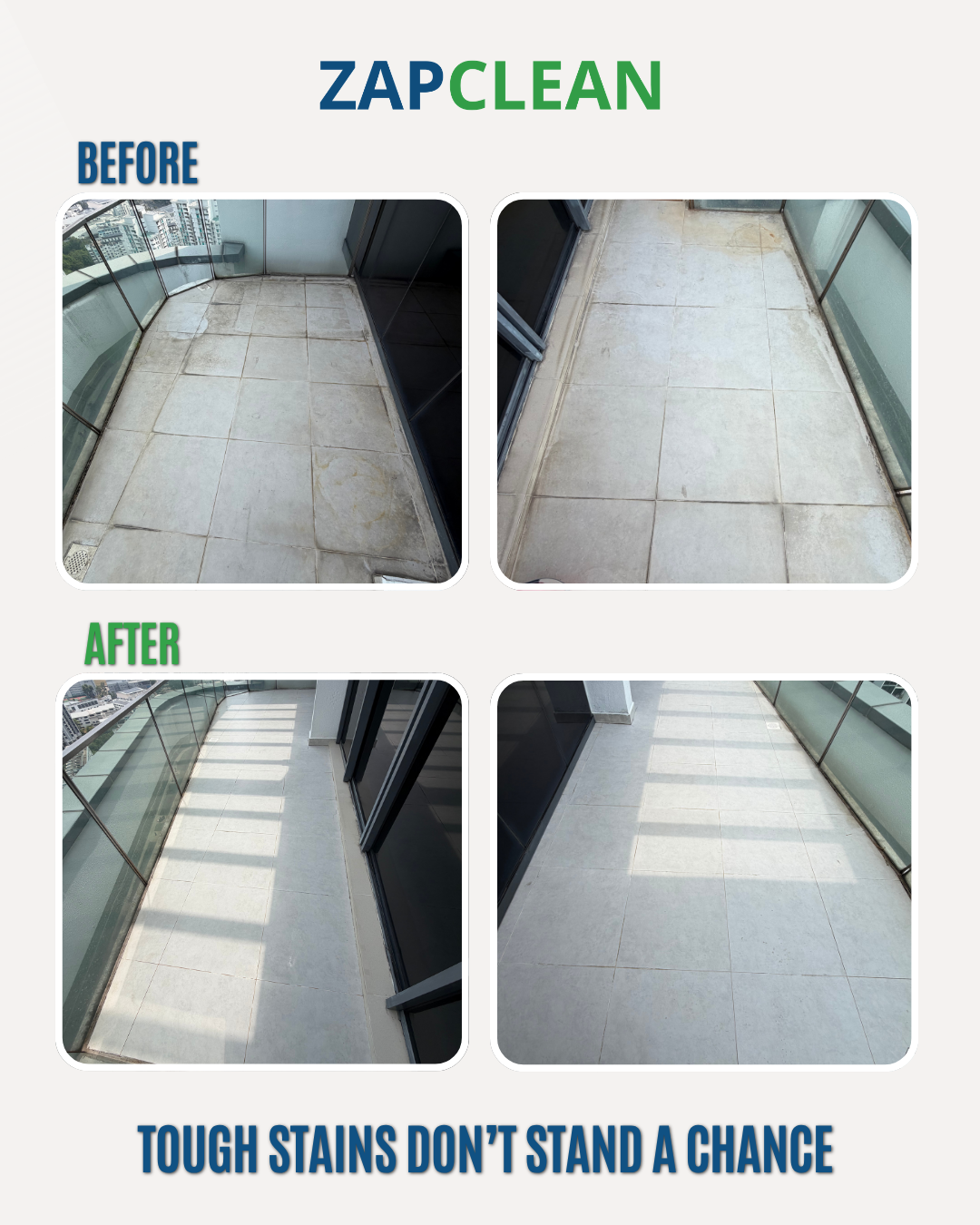
This job came to us as a pressure washing enquiry. The homeowner's balcony tiles had gone. patchy and discoloured over time. Rust and black-brown staining, worse in some spots than others, the kind that builds up over years rather than weeks. A pressure wash was the obvious first thought, since that's usually the go to for dirty outdoor tiles.
Once we assessed it on-site, it was clear this wasn't a pressure washing job. The staining had set into the tile's surface, not sitting on top of it so we used a targeted chemical treatment instead, and the tiles came back looking close to new.
It's a mix-up we see often enough that it's worth explaining properly: what pressure washing is actually good for, what it isn't, and when a surface needs chemical treatment instead.
Why didn't pressure washing work here?
Pressure washing works by physically blasting away whatever's sitting on a surface — dust, loose dirt, algae, moss, cobwebs. If it can be lifted or knocked off with water and force, a pressure washer handles it well.
The staining on this balcony wasn't sitting on the tile — it had become part of the tile's surface over time. A few things typically cause this on exposed outdoor tiles in Singapore:
• Mineral deposits (efflorescence) — water repeatedly evaporates on the surface and leaves mineral salts behind, which build up into a chalky or discoloured film
• Oxidation and rust bleed — nearby metal fixtures, railings or reinforcement can leach rust-coloured staining onto tiles below or around them
• General weathering — years of sun, rain and humidity gradually change the colour and texture of a tile's surface finish, especially on unshaded, high-floor balconies
• Organic staining — algae or grime that's been left long enough to discolour the grout or porous tile beneath it, not just sit on top
None of that responds well to water pressure alone. You can pressure wash a surface like this repeatedly and the discolouration will still be there — because the problem was never dirt sitting on the tile, it was the tile's surface itself.
What actually got the stains out
For jobs like this, we use a chemical treatment suited to the specific tile — not a generic one-size-fits-all solution, since the wrong chemical on the wrong tile can cause discolouration or damage that's harder to fix than the stain itself.
On this job, the process was:
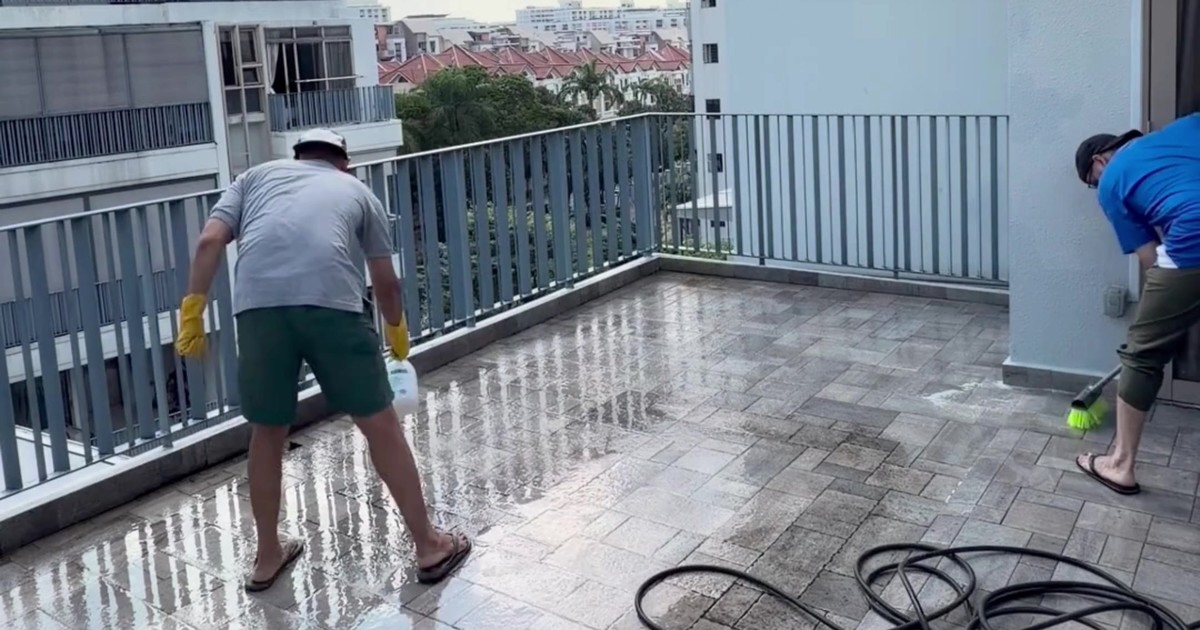
1 Apply the chemical treatment and scrub it into the surface — most of the staining lifted with this first pass alone
2 Spot-treat the stubborn areas with a slightly stronger application wherever the first pass didn't fully clear the stain
3 Rinse thoroughly and neutralise the chemicals — this step matters as much as the treatment itself, since any residue left behind can go on to damage or discolour the tile over time
That last step is easy to skip if you're only optimising for how the tiles look right after the job. It's also the step that determines whether the tiles still look good six months later.
For scale: this was one balcony, done start to finish — application, spot treatment, rinse and neutralising in about 1.5 hours.
How do you know which one your surface needs?
A quick way to tell before calling anyone:
• Rinses off, lightens with a scrub, or was recently added (like fresh bird droppings or loose dust) → pressure washing will likely handle it
• Patchy discolouration that's been there a long time, doesn't lighten when wet, or shows up worse near metal fixtures or in unshaded spots → more likely embedded staining that needs chemical treatment
If you're not sure, that's normal — it's not always obvious just by looking, and using the wrong method wastes time or, worse, damages the surface. We assess this on-site before recommending a method, which is part of why we don't quote sight-unseen over the phone.
Why treat instead of retile?
When tiles are this stained, retiling can look like the only real fix — especially once the discolouration seems baked in. But retiling means breaking out the existing tiles, sourcing matching replacements (not always possible if the original tile's been discontinued), the mess and downtime of the work itself, and for condos, usually getting it approved by the MCST or management first.
Chemical treatment skips all of that. If the tile itself is structurally fine — no cracks, no chips, nothing hollow underneath — and the problem is purely the staining, treatment gets you a clean result without the disruption, at a fraction of what retiling costs. Retiling only really becomes necessary once the tile itself is damaged, not just discoloured.
That's worth checking before committing to a retile: stained doesn't always mean damaged.
The result
The tiles went from visibly stained and uneven in colour — patchy discolouration across most of the balcony — to a consistent, clean finish, with no change to the tile's texture or surface in the process.
Frequently Asked Questions
Can pressure washing remove old stains from outdoor tiles?
Not usually. Pressure washing lifts surface dirt, dust, algae and loose grime effectively, but it doesn't remove staining that has set into the tile itself — things like oxidation, mineral deposits or long-term weathering. Those need a chemical treatment matched to the tile.
What causes tile discolouration on balconies and roof terraces in Singapore?
The most common causes are mineral deposits left behind as water evaporates (efflorescence), rust or oxidation bleeding from nearby metal fixtures, general weathering from years of sun and rain exposure, and organic staining that's been left long enough to set into the tile or grout.
Is chemical treatment safe for tiles?
Yes, when the treatment is matched to the specific tile type and tested on a small area first. Testing is a required first step, not an optional one, because the wrong chemical on the wrong tile can cause discolouration or damage.
How do I know if my tiles need pressure washing or chemical treatment?
If the grime rinses off or lightens easily with water and scrubbing, pressure washing is usually enough. If the discolouration is patchy, has been there for a long time, and doesn't respond to water, it's more likely embedded staining that needs targeted chemical treatment. An on-site assessment is the reliable way to tell.
Is it cheaper to clean stained tiles than to retile them?
In most cases, yes. Chemical treatment costs a fraction of what retiling involves — no demolition, no sourcing replacement tiles, no downtime, and for condos, none of the MCST or management approval a full retile usually needs. Retiling is really only necessary once the tile itself is physically damaged, not just discoloured.
Does ZapClean only do pressure washing?
No — pressure washing is one part of what we do. Depending on what a surface actually needs, we also use chemical treatments to handle staining that pressure alone can't touch. We assess each job on-site and recommend whichever method (or combination) actually fits the problem.
Not sure if your tiles need a pressure wash, a chemical treatment, or actually need retiling? Contact ZAPCLEAN for a site assessment — often cheaper, and faster, than you'd expect.