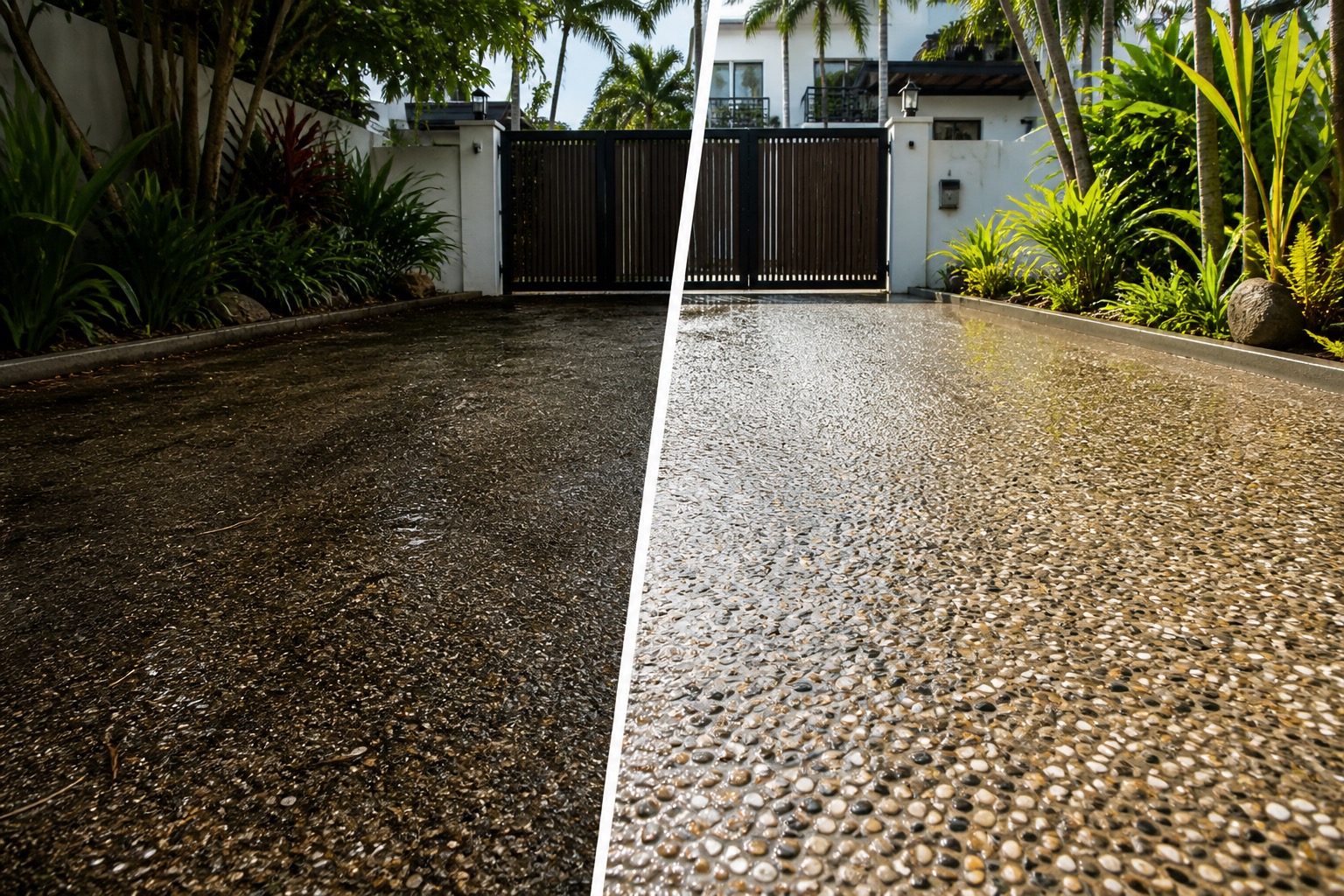
Roof terrace cleaning is a job we're seeing more of. Most owners only notice the problem when the tiles have gone from light grey to dull green or when someone slips on a wet morning.
Why Terraces Get Dirty So Fast Here
It isn't dust. In Singapore's climate, three things work against an open outdoor surface:
• Constant humidity keeps shaded corners damp, giving algae, moss and mould a permanent foothold.
• Heat and UV bake dust and pollution particles into the pores of the tile until the layer is bonded on to the flooring
• Frequent rain doesn't clean anything, it feeds the growth and leaves mineral deposits behind as it dries.
The result is grime that sits inside the surface texture. That's why a hose and a broom rarely make a real difference.
There's a safety angle too. Algae and biofilm are slippery when wet, and a rooftop terrace is the last place you want to be slippery
Our Process
The order of these steps matters. Skipping one is why most DIY attempts disappoint.
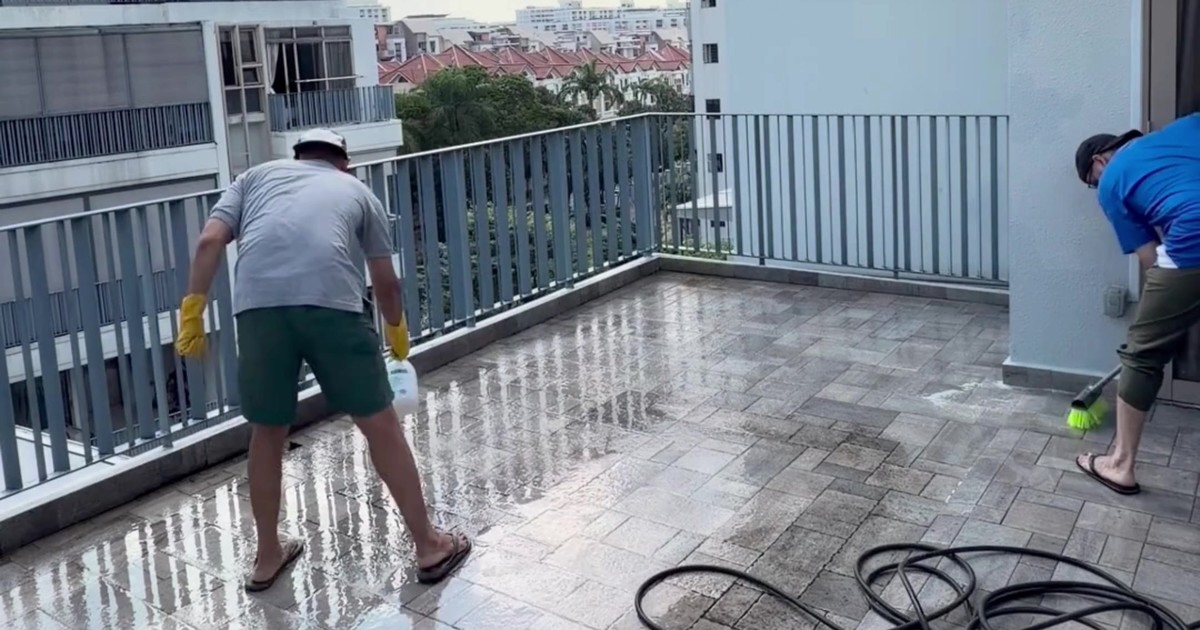
1. Chemical pre treatment. We apply a cleaning solution across the surface and let it dwell. This does the heavy lifting, breaking the bond between the dirt and the tile so it can actually be lifted off.
2. Scrubbing. Once the solution has worked, we agitate the surface mechanically. This drives the treatment into the tile texture and grout lines, especially in corners and around drainage points where growth is heaviest.
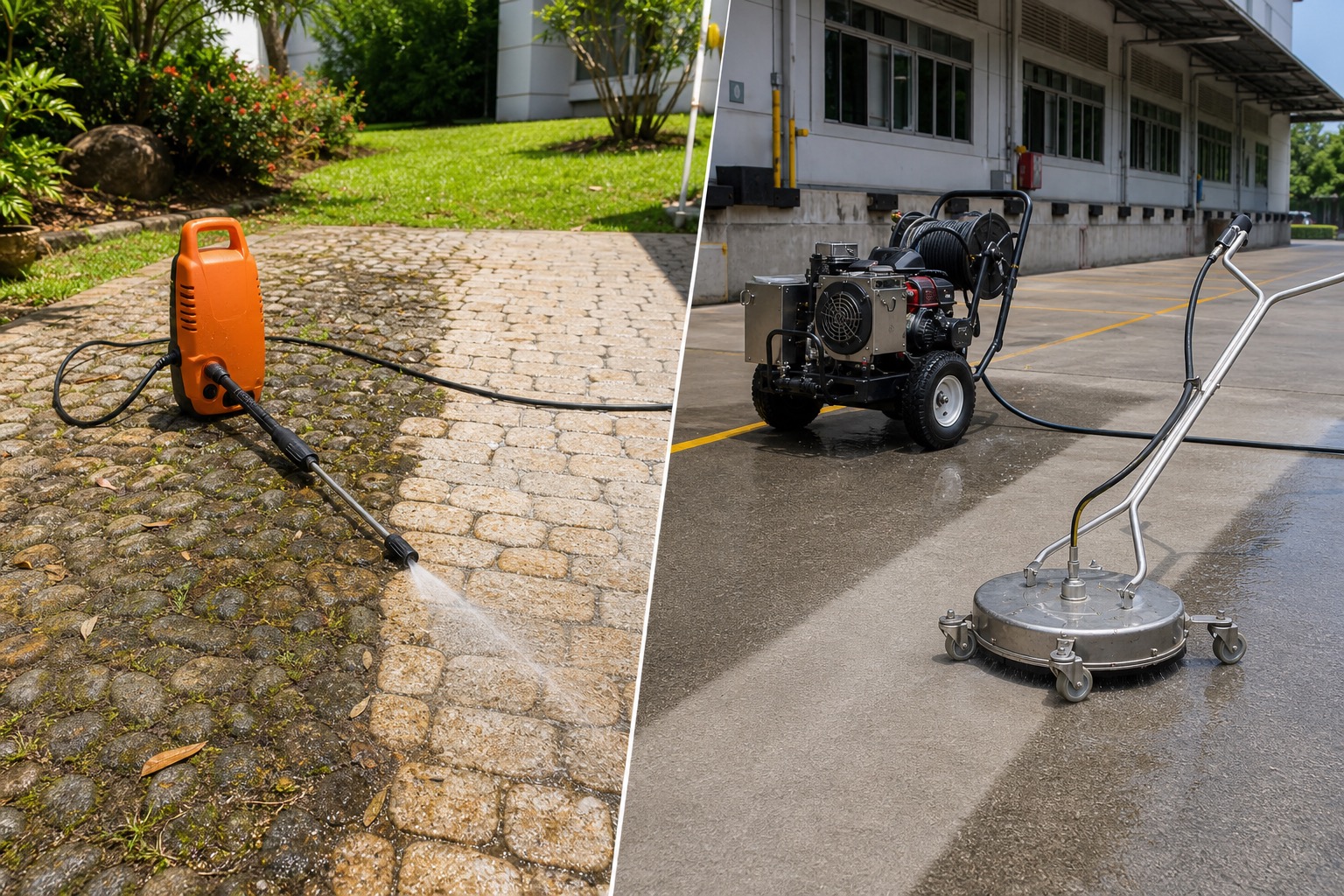
3. Pressure washing. Only now does the machine come out. The jet spray removes the loosened grime, with pressure and nozzle matched to the surface so the tile and grout aren't
damaged.
4. Final rinse. We flush the whole area to clear residue and cleaning solution, directing run off to the proper drainage points. A terrace that's washed but not rinsed properly dries patchy.
Key Takeaways
• Chemical treatment first, pressure alone can't remove bonded tropical grime
• Rushing the dwell time is the most common mistake
• Slippery terraces are a safety issue, not just a cosmetic one
• Most Singapore terraces need a professional clean once or twice a year